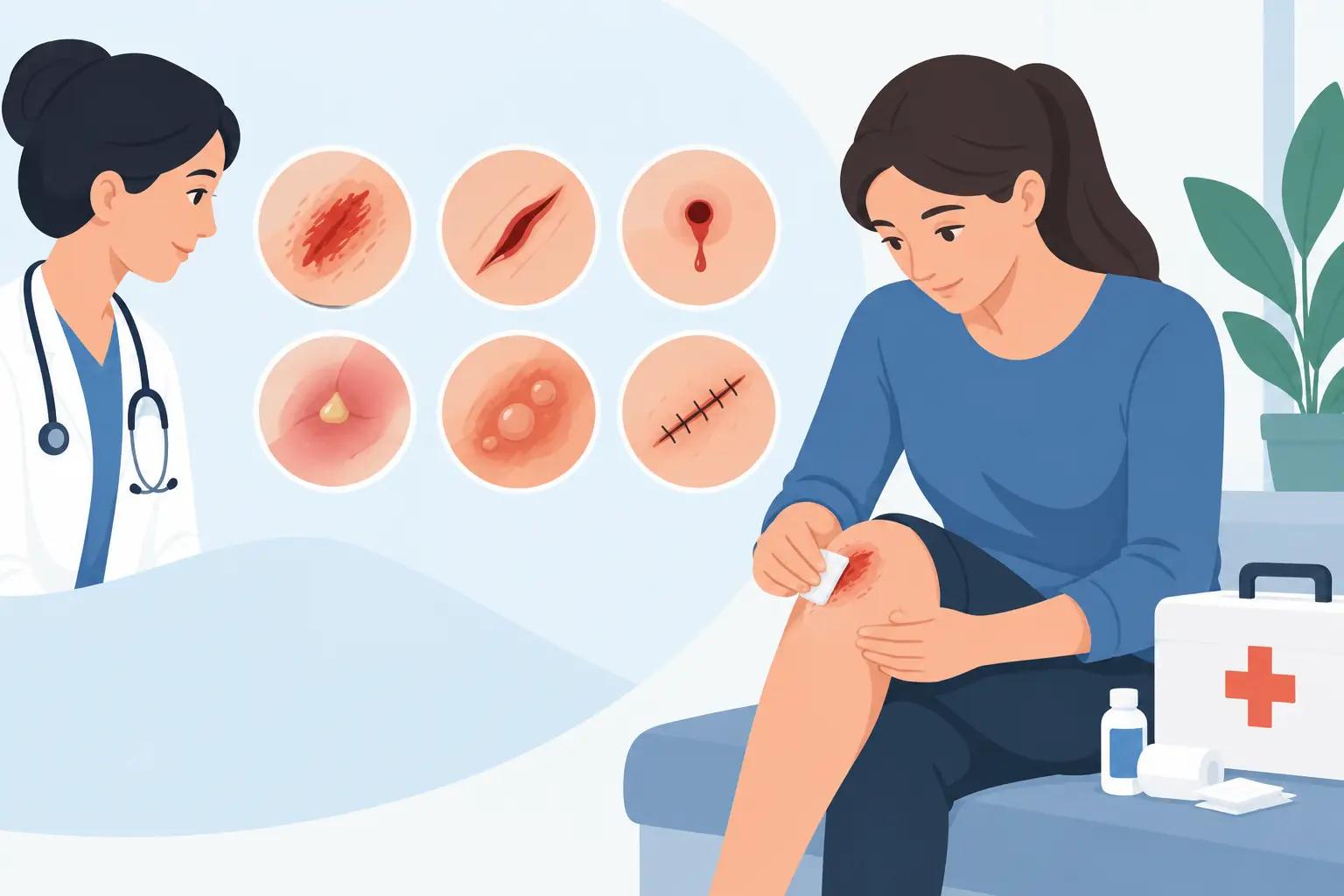
A kitchen knife slips, an older parent falls and tears fragile skin, or a small blister suddenly becomes painful and red. In these moments, families often ask: which wounds need urgent care? The answer depends on more than how a wound looks. Bleeding, depth, contamination, location, pain, circulation, and a person's health conditions can all change the level of risk.
Some wounds can be safely cleaned, covered, and watched at home. Others need a clinician's assessment the same day, while a small number require emergency care immediately. Knowing the difference helps you act promptly without causing unnecessary stress.
Which Wounds Need Urgent Care Right Away?
Call emergency services or go to an emergency department immediately if a wound causes severe or uncontrolled bleeding. Apply firm, continuous pressure with a clean cloth or dressing while help is arranged. Do not repeatedly lift the cloth to check the wound, as this can disrupt clotting. If blood soaks through, add another layer over it.
Urgent emergency assessment is also needed when there is a deep wound with exposed fat, muscle, tendon, or bone; a body part is partly or fully detached; or the wound follows a serious accident, crushing injury, or high-force impact. Wounds to the chest, abdomen, neck, eye, or genitals should not be managed at home.
Seek emergency help if the person becomes faint, confused, unusually sleepy, pale, cold, clammy, or has trouble breathing. These can be signs of shock or another serious injury, particularly after significant blood loss or trauma.
A person with a wound and reduced feeling, weakness, loss of movement, or a pale, blue, or cold hand or foot also needs immediate medical assessment. These symptoms may point to nerve, tendon, or blood vessel damage.
Wounds That Need Same-Day Medical Assessment
Not every urgent wound involves dramatic bleeding. A doctor should assess the following injuries as soon as possible, ideally on the same day:
- Deep cuts, gaping cuts, or cuts with edges that do not stay together
- Cuts caused by dirty, rusty, or contaminated objects
- Puncture wounds, including those from nails, needles, fishhooks, or sharp tools
- Human or animal bites, even when the skin break looks small
- Burns with blisters, burns larger than the person's palm, or burns on the face, hands, feet, joints, or genitals
- Wounds containing glass, gravel, wood, or another object that cannot be easily removed
- Wounds that continue bleeding after 10 to 15 minutes of steady pressure
A puncture wound can look minor because the opening is small, but bacteria may be carried deep into tissue. Bite wounds also carry a meaningful infection risk. Cats, dogs, and humans can all introduce bacteria through a bite, and the clinician may need to assess whether cleaning, antibiotics, tetanus protection, or other treatment is appropriate.
Cuts on the face may need timely assessment because careful closure can affect healing and scarring. Injuries over a finger, hand, knee, elbow, or ankle deserve attention if movement is painful or limited. A tendon injury is not always obvious from the surface.
When a Wound May Be Infected
A wound does not have to be new to need urgent care. Infection can develop days after a cut, abrasion, surgery, or blister. Mild redness immediately around a healing wound may be normal, but redness that spreads, deepens, or becomes increasingly painful should be checked.
Arrange a prompt medical review for warmth, swelling, worsening tenderness, pus or cloudy drainage, a bad smell, or red streaks moving away from the wound. Fever, chills, fatigue, or confusion alongside a wound can mean the infection is affecting more than the skin.
For an older adult or someone who is frail, confused, or living with dementia, infection may first appear as a sudden decline in appetite, mobility, alertness, or usual behavior. Families should take these changes seriously, especially when a wound is present.
Higher-Risk Wounds Need a Lower Threshold for Care
The same wound can carry different risks for different people. Prompt assessment is particularly sensible for anyone with diabetes, poor circulation, peripheral artery disease, nerve damage, a weakened immune system, kidney disease, or a history of slow-healing wounds.
Diabetes can reduce sensation in the feet, so an injury may not hurt as much as expected. It can also affect circulation and healing. A blister, cracked heel, or small cut on a diabetic foot should be reviewed early rather than watched for several days.
People taking blood thinners may bleed more heavily or bruise more easily after a minor injury. Do not stop prescribed medication without medical advice, but seek timely care if bleeding is difficult to control or a wound appears deeper than it first seemed.
Basic First Aid While You Arrange Care
For a minor cut or scrape, wash your hands first. If bleeding is controlled, rinse the wound gently under clean running water. Soap can be used on the surrounding skin, but avoid getting harsh products, alcohol, or hydrogen peroxide deep into the wound, as these may irritate healing tissue.
Pat the area dry and cover it with a clean, nonstick dressing. Change the dressing if it becomes wet, dirty, or loose. Keep an eye on pain, redness, swelling, and drainage over the next few days.
Do not attempt to remove deeply embedded objects. Do not push exposed tissue back into a wound. For a burn, cool the area under cool running water for 20 minutes if possible. Do not apply ice, toothpaste, butter, oils, or adhesive dressings to the burn.
If there is a chance of tetanus exposure, a clinician can review the person's vaccination history and advise whether a booster or further treatment is needed. This is especially relevant for puncture wounds, contaminated wounds, and wounds involving soil or animal bites.
When Home-Based Wound Care May Be Suitable
For patients who are stable and do not have emergency warning signs, an at-home medical assessment may be a practical option. This can be especially helpful for older adults, people with limited mobility, patients recovering after hospitalization, or caregivers managing recurring dressing changes.
A clinician can assess the wound, look for signs of infection or poor circulation, review medications and health conditions that affect healing, and advise on an appropriate dressing plan. Some wounds need regular monitoring rather than a single treatment, particularly pressure injuries, diabetic foot wounds, post-surgical wounds, and skin tears in fragile skin.
Home care is not a substitute for emergency treatment when there is major bleeding, severe trauma, or signs of serious illness. Before arranging a home visit, describe the wound, symptoms, location, medical history, and current medications clearly. This helps confirm whether home assessment is suitable and what care may be needed.
Dr Care At Home can coordinate doctor assessment and wound management for suitable patients in Kuala Lumpur and Selangor, with availability, visit timing, and costs discussed before a booking is confirmed.
A Practical Check Before You Wait
If you are unsure whether to monitor a wound, ask three questions: Is the bleeding controlled? Is there any loss of function, sensation, or circulation? Is the wound becoming more painful, red, swollen, or unwell-looking rather than improving?
If the answer to any of these is yes, do not wait for a routine appointment. Timely assessment can protect function, reduce infection risk, and make recovery less complicated. For a family member who cannot easily travel, arranging appropriate clinical care in a familiar setting can also provide the reassurance of having a clear plan for the next dressing change, follow-up, and warning signs to watch for.