A headache after a busy day, a dry mouth during a stomach bug, or unusual tiredness in an older parent can seem minor at first. Yet the top signs of dehydration are easy to miss when someone is unwell, recovering at home, or simply not drinking enough. Knowing what to watch for can help you respond early and recognize when medical assessment is needed.
What dehydration does to the body
Dehydration happens when the body loses more fluid than it takes in. Water is needed to regulate temperature, support circulation, remove waste through urine, and help the brain, muscles, and organs work properly. Fluid can be lost through sweating, fever, vomiting, diarrhea, frequent urination, or reduced food and drink intake.
Mild dehydration may improve with prompt fluids and rest. More significant dehydration can affect blood pressure, kidney function, alertness, and heart rate. The risk is higher for infants and young children, older adults, people with limited mobility, and anyone with an illness that makes it difficult to drink or keep fluids down.
Top signs of dehydration in adults
Thirst is a useful signal, but it is not always reliable. Some older adults may not feel thirsty even when they need more fluids. Looking at several changes together gives a clearer picture.
Dark or reduced urine
Urine that is darker yellow than usual, strong-smelling, or less frequent can be an early clue that the body is conserving water. A person who is normally using the bathroom regularly but has urinated very little over many hours should be assessed, especially if this occurs alongside vomiting, diarrhea, fever, or weakness.
Some medications, vitamins, and foods can change urine color, so color alone does not confirm dehydration. The overall pattern matters: reduced drinking, reduced urination, dry mouth, and tiredness together deserve attention.
Dry mouth, lips, and skin
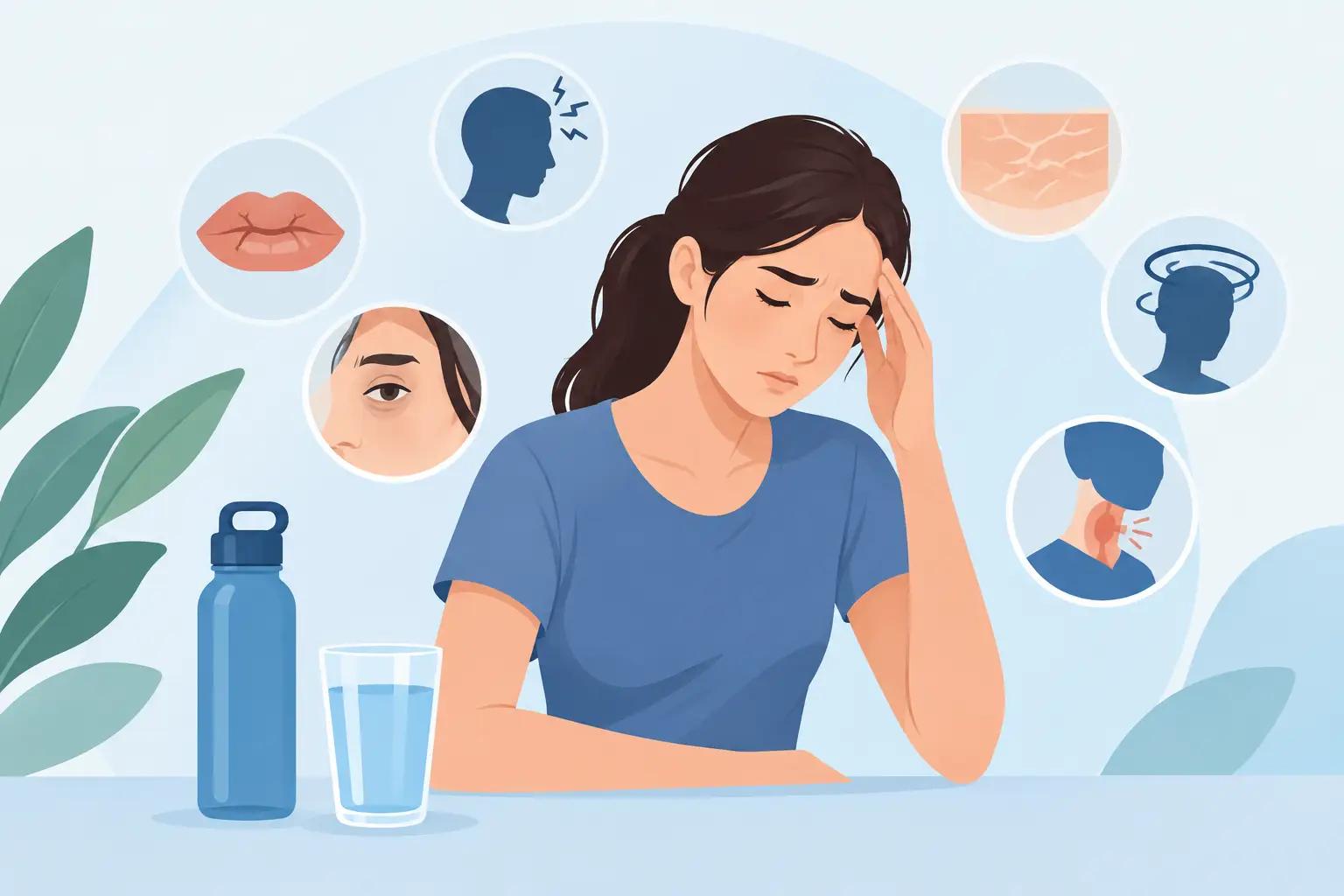
A sticky or dry mouth, cracked lips, and a dry tongue may suggest reduced fluid intake. Skin can also feel less elastic, although skin changes are not a dependable test on their own, particularly in older adults. Look for dry mouth together with other symptoms rather than relying on one sign.
Headache, dizziness, or unusual fatigue
Dehydration can cause headaches, lightheadedness, weakness, and difficulty concentrating. Dizziness that occurs when standing up may happen when fluid loss affects circulation. Someone may say they feel faint, unsteady, or unusually sleepy.
These symptoms can also result from low blood sugar, infection, medication effects, blood pressure changes, or other medical concerns. If dizziness is severe, sudden, associated with a fall, or accompanied by chest pain, shortness of breath, weakness on one side, or trouble speaking, seek urgent medical help rather than assuming dehydration is the cause.
Fast heartbeat or rapid breathing
As dehydration becomes more serious, the heart may beat faster as the body tries to maintain circulation. Rapid breathing, marked weakness, cool hands or feet, and pale or clammy skin can be concerning signs, particularly after heavy fluid loss from diarrhea, vomiting, or heat exposure.
Confusion or a change in behavior
New confusion, agitation, drowsiness, or difficulty staying awake should never be brushed off as simple thirst, especially in an older person. Dehydration can contribute to delirium, but infection, low oxygen, stroke, medication reactions, and other urgent conditions can cause similar changes. Prompt medical assessment is appropriate when a person is not acting like themselves.
Signs of dehydration in children and babies
Children can become dehydrated more quickly than adults because of their smaller body size. This is particularly common with gastroenteritis, fever, or hot weather. Parents and caregivers should watch behavior and diaper or bathroom habits closely.
Warning signs can include fewer wet diapers or trips to the bathroom, no tears when crying, a dry mouth, sunken-looking eyes, irritability, unusual sleepiness, or poor feeding. In babies, a sunken soft spot on the head may occur with more significant dehydration.
A child who is repeatedly vomiting, cannot keep down small sips of fluid, is difficult to wake, has very few wet diapers, or appears limp or unusually quiet needs urgent medical advice. Babies under 3 months with fever also require prompt evaluation, whether or not dehydration is suspected.
Why older adults need closer monitoring
An older relative may become dehydrated without making a complaint. Reduced thirst, memory changes, swallowing difficulties, limited mobility, and concern about needing the bathroom can all lead to lower fluid intake. Diuretics, laxatives, diabetes medications, and some blood pressure medications may also affect fluid balance.
During illness, check whether the person is drinking, eating, urinating, and thinking clearly. Keep preferred drinks within reach if it is safe for them to drink independently, and offer small amounts regularly rather than leaving a large glass untouched. For people with heart failure, kidney disease, or a prescribed fluid restriction, do not encourage large volumes without guidance from their clinician. Their fluid plan needs to be individualized.
What to do when you notice early symptoms
If the person is alert, able to swallow safely, and has only mild symptoms, start with frequent small sips of fluid. Water may be enough after mild sweating or a missed meal. When vomiting or diarrhea has caused fluid loss, an oral rehydration solution can be more useful because it contains a balanced amount of water, salts, and sugar.
Avoid relying only on very sugary drinks, alcohol, or large amounts of caffeine. These may worsen stomach upset or are not ideal for replacing lost electrolytes. Clear soups and water-rich foods may help some people, but they do not replace medical advice if symptoms are progressing.
Do not force fluids in someone who is drowsy, confused, choking, or unable to swallow safely. They may need a medical assessment to determine the cause and the safest treatment. Intravenous fluids are not automatically the right answer for every person who feels unwell. A clinician should assess symptoms, medical history, medications, vital signs, and the degree of fluid loss before recommending treatment.
When dehydration needs urgent care
Call emergency services or seek urgent in-person medical care if dehydration may be severe. Concerning symptoms include fainting, loss of consciousness, confusion, seizures, severe weakness, inability to keep fluids down, very little or no urine, a racing heartbeat, severe abdominal pain, bloody vomit, bloody stool, or black stool.
Heat-related illness also needs prompt attention. After heat exposure, confusion, collapse, very hot skin, or a very high body temperature can indicate a medical emergency. Move the person to a cooler place while arranging emergency care.
For less immediate but still concerning situations, a same-day clinician assessment may be appropriate. Examples include ongoing diarrhea or vomiting, fever with poor intake, increasing dizziness, worsening weakness, or an older adult who is drinking very little and becoming confused. A home medical visit may be a practical option for people who are frail, recovering from illness, or unable to travel comfortably, provided their symptoms do not require emergency hospital care.
A simple way to monitor recovery
Once fluids are started, watch for gradual improvement rather than expecting an instant change. The person should become more alert, able to drink comfortably, and begin urinating more normally. Headache and dizziness should ease rather than worsen.
Write down when symptoms began, how often vomiting or diarrhea is happening, what fluids have been tolerated, recent urine output, temperature, and current medications. This information helps a clinician make safer decisions, particularly for children, older adults, and people managing chronic conditions.
Small changes can carry useful information. When a family member is drinking less, urinating less, or behaving differently than usual, responding early with careful observation and timely medical advice can make home recovery safer and more comfortable.