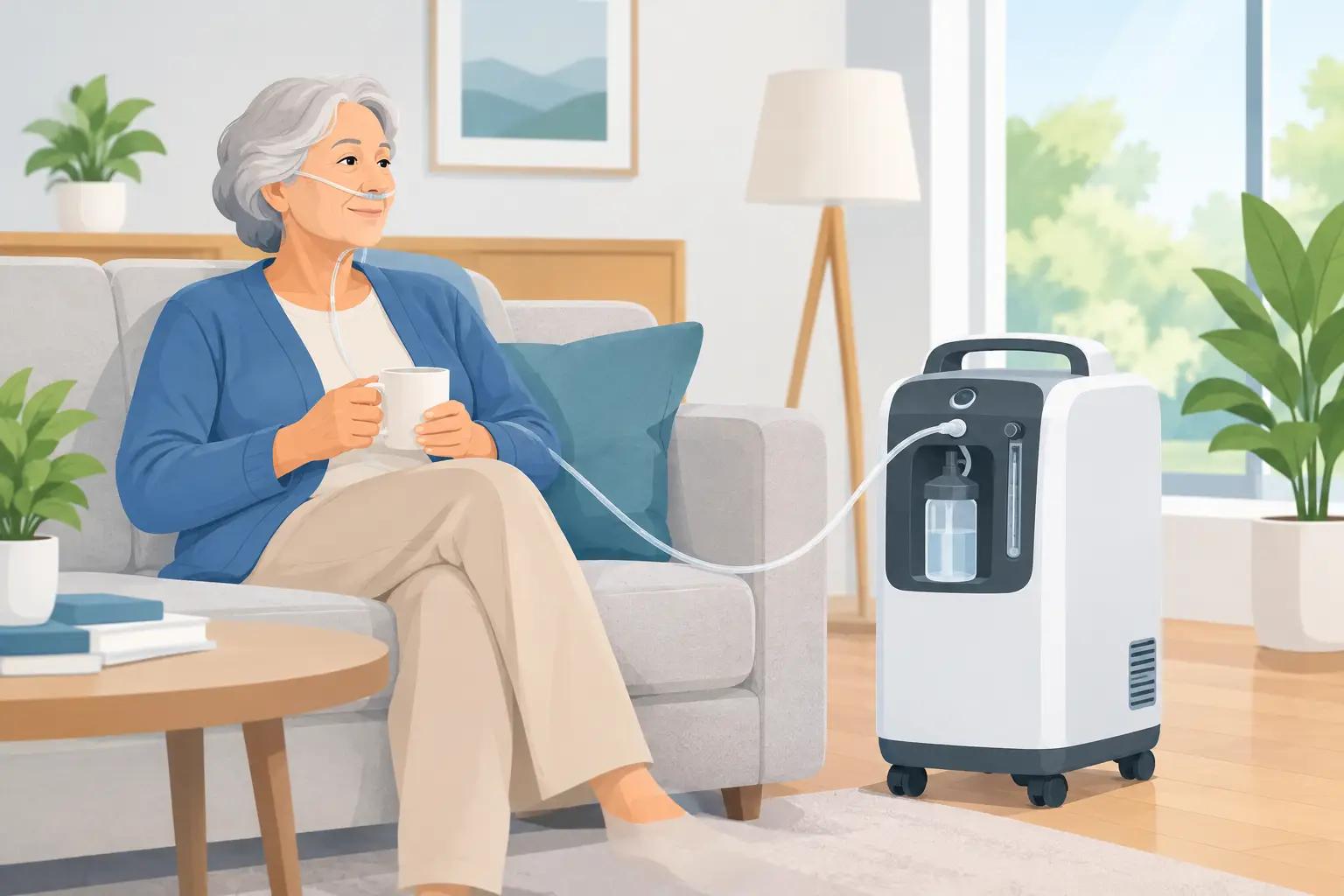
A home oxygen device can make it easier for someone to rest, recover, and remain in a familiar place. But oxygen concentrators are not general wellness equipment. They are medical devices used when a clinician has assessed that a person needs supplemental oxygen, with a specific flow rate and plan for use.
For families, the practical questions usually come quickly: Is this device suitable for my parent? Can it run overnight? What happens during a power outage? How do we keep the home safe? Clear answers, careful setup, and regular clinical review matter just as much as the machine itself.
What oxygen concentrators do
Oxygen concentrators take in room air, remove much of the nitrogen, and deliver a higher concentration of oxygen through tubing and a nasal cannula or, in some cases, a mask. Unlike an oxygen cylinder, a concentrator does not need to be refilled. It produces oxygen continuously while it has power and is working correctly.
The device does not treat the underlying cause of low oxygen levels. It supports the body when the lungs or heart are not getting enough oxygen into the blood. A doctor may prescribe oxygen for chronic lung disease, some heart conditions, severe respiratory infections, recovery after hospitalization, or palliative care. The right approach depends on the diagnosis, oxygen readings, symptoms, and overall goals of care.
A concentrator is not automatically the best choice for every situation. Some people need a stationary device for regular home use, while others may need a portable unit for appointments or travel. Others need cylinder backup because they live in an area with unreliable electricity or require a flow rate that a particular portable device cannot provide.
Start with a medical assessment, not a device choice
Breathlessness can be frightening, especially when it develops suddenly. However, feeling short of breath does not always mean oxygen is the answer. Anxiety, asthma, fluid overload, anemia, pneumonia, blood clots, and heart problems can all cause breathlessness and require different treatment.
A clinician should assess the person before oxygen is started or changed. This commonly includes checking oxygen saturation with a pulse oximeter, listening to the lungs, reviewing medical history and medication, and deciding whether home care is appropriate. A low reading can be serious, but a number should always be interpreted alongside the person’s condition. Cold hands, movement, nail products, poor circulation, and an incorrectly placed sensor can affect pulse oximeter readings.
For some patients, particularly people with certain forms of chronic obstructive pulmonary disease, using more oxygen than prescribed can be harmful. Do not increase the flow rate because someone appears tired or uncomfortable without medical advice. New confusion, worsening drowsiness, chest pain, blue or gray lips, severe breathing difficulty, or inability to speak in full sentences needs urgent medical attention rather than an equipment adjustment.
The prescription details families should understand
Before equipment is arranged, families should know the prescribed flow rate, when oxygen is to be used, and how the person should be monitored. Ask whether oxygen is needed continuously, only during sleep, only with activity, or for a temporary recovery period. Confirm whether the setting is continuous flow or pulse dose, as these are not interchangeable.
The clinician should also explain what oxygen saturation range is appropriate for that individual, when to recheck readings, and who to contact if symptoms change. A simple written plan is useful when several relatives or caregivers share responsibilities. It should include the diagnosis, prescribed settings, current medications, emergency contacts, and the backup plan for a device failure or power interruption.
Families should avoid buying or borrowing a concentrator based only on online descriptions. The machine’s maximum flow, oxygen purity, alarm features, battery capacity, noise level, and servicing history all affect suitability. A device that works well for one person may not meet another patient’s needs.
Setting up oxygen concentrators at home
Place the concentrator on a firm, level surface in a clean, dry, well-ventilated area. Keep it away from curtains, bedding, walls, and furniture that may block air intake or exhaust vents. Do not place it in a closed cabinet or crowded corner. The device needs space around it to prevent overheating.
Use a direct, properly grounded electrical outlet where possible. Avoid extension cords and overloaded power strips unless the equipment provider specifically confirms they are safe for the device. Tubing should be long enough for basic movement around the room, but not so long that it creates a trip hazard. Secure it thoughtfully, especially in homes where an older adult walks independently at night.
The nasal cannula should fit comfortably without pulling on the ears or nostrils. Dryness, mild irritation, and pressure marks can develop with prolonged use. Caregivers can ask the clinical team about suitable comfort measures and skin checks. Do not use petroleum-based products near the nose or face when oxygen is in use. If a moisturizer is needed, seek advice on a safer alternative.
Equipment instructions vary, so the patient and caregiver should receive a demonstration. They need to know how to turn the unit on, confirm that oxygen is flowing, recognize alarms, clean or replace external filters if instructed, and contact the supplier for faults. Never attempt internal repairs.
Oxygen safety is household safety
Oxygen itself does not burn, but it makes fires burn faster and more intensely. This is the most important home safety message. No one should smoke, vape, light candles, use incense, or create sparks near oxygen equipment or tubing. Keep the device and oxygen user well away from gas stoves, fireplaces, heaters, and open flames.
A visible no-smoking rule helps protect visitors as well as household members. Ensure smoke alarms are functioning and that everyone knows how to leave the home safely during a fire. Store any backup oxygen cylinders upright, secured from falling, and away from heat sources.
Electrical and tubing safety deserve the same attention. Check regularly for frayed cords, bent tubing, loose connections, or damaged cannulas. Keep walkways clear and make sure the patient can call for help, particularly if oxygen is used overnight.
Plan for power outages and changing needs
A stationary concentrator stops working when electricity is unavailable. Every household using one should have a confirmed backup plan before an outage occurs. Depending on the prescription and local equipment arrangement, this may include a backup cylinder, a portable concentrator with charged batteries, or an agreed plan to move temporarily to a location with power.
Keep emergency contact numbers available and tell the electricity provider, where applicable, that a medically dependent person lives in the home. Do not wait for an outage to discover whether backup supply is adequate. Review the plan after a hospital discharge, a change in prescribed flow rate, or any decline in mobility.
A person’s oxygen requirement may improve after an acute illness or increase as a condition progresses. Follow-up is therefore essential. Clinicians may reassess symptoms, activity tolerance, pulse oximeter readings, medication, nutrition, fluid status, and the condition of the skin around the cannula. Oxygen should not become a substitute for reviewing a worsening medical problem.
Coordinating care in a familiar environment
Home-based medical support can help families manage oxygen therapy with less disruption, particularly after hospitalization or when mobility is limited. A coordinated visit may include clinical assessment, medication review, caregiver instruction, and discussion of equipment needs alongside other services such as nursing care, rehabilitation, wound care, or palliative support.
At Dr Care At Home, suitability, availability, and expected fees can be discussed before care is arranged. This helps families understand whether a home visit is appropriate and what support may be needed next, rather than trying to solve a respiratory concern with equipment alone.
The most reassuring home oxygen plan is not simply a concentrator beside the bed. It is a clear prescription, a safe setup, prepared caregivers, and a clinical team that knows when the person needs reassessment.