
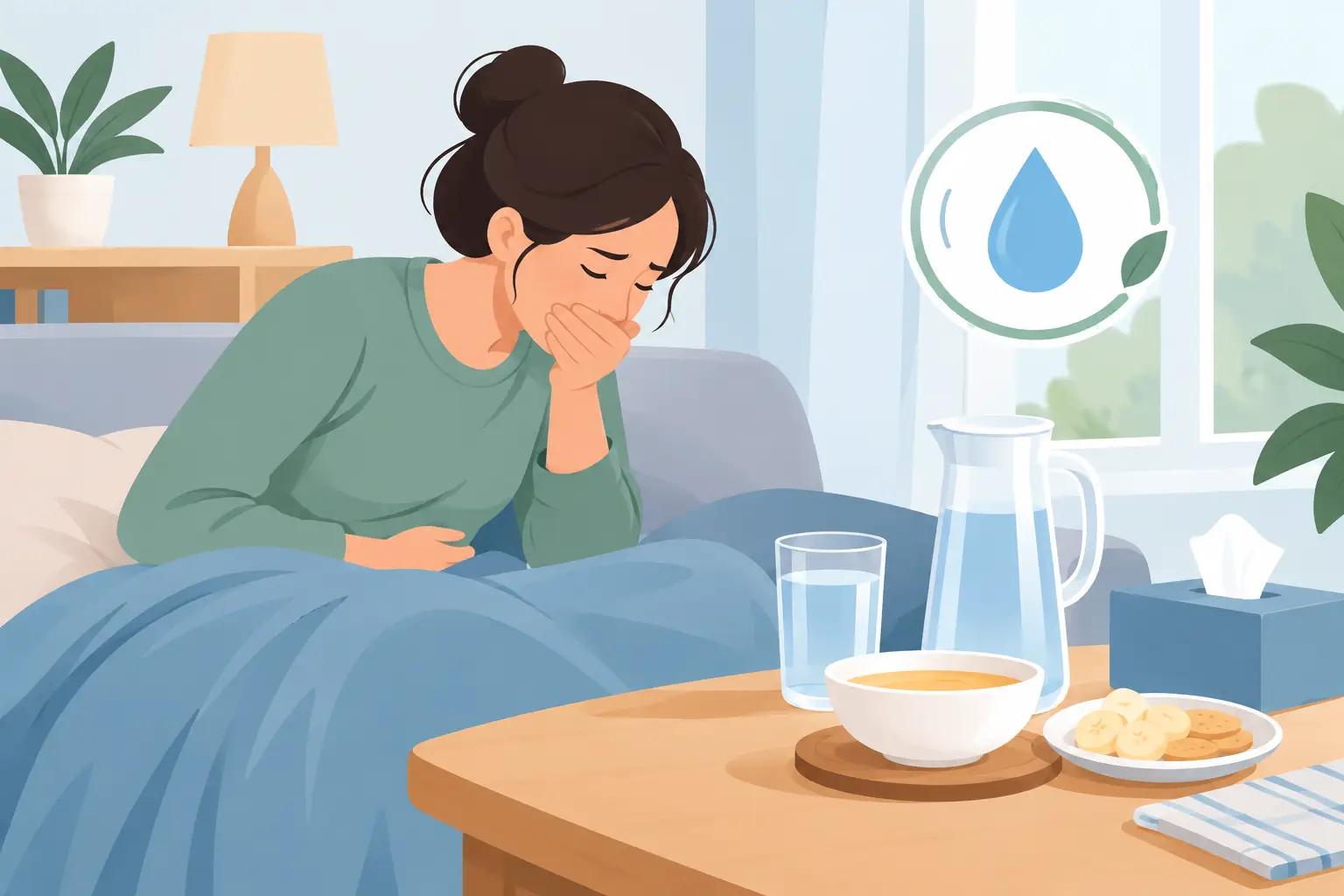
A sudden vomiting episode can turn a normal evening into a worrying one, especially when a child, older parent, or person recovering from illness cannot keep even small sips down. To manage vomiting at home safely, focus first on preventing dehydration, reducing the risk of choking, and recognizing when home care is no longer enough.
Vomiting is a symptom, not a diagnosis. It may follow a stomach virus, food poisoning, migraine, motion sickness, medication side effects, pregnancy, or an underlying medical condition. Many short-lived episodes improve with careful rest and fluids, but severe or persistent vomiting needs medical assessment.
Start with safety and comfort
During active vomiting, have the person sit upright or lean forward. If they are very tired, weak, or unable to sit up, position them on their side rather than flat on their back. This helps reduce the chance of breathing vomit into the lungs.
Keep a container nearby, loosen tight clothing, and use a cool cloth if they feel hot or sweaty. Avoid strong smells from cooking, perfume, smoke, or cleaning products, as these can worsen nausea. A quiet room and minimal movement can also help, particularly when nausea is linked to migraine, vertigo, or motion sickness.
Do not offer a large glass of water immediately after vomiting. A full stomach can trigger another episode. Let the stomach settle for about 15 to 30 minutes, then restart fluids slowly.
How to manage vomiting at home with fluids
The main home-care goal is replacing fluid and electrolytes without causing more nausea. Start with very small amounts: one or two teaspoons every few minutes for a young child, or small sips for an adult. If this stays down for 20 to 30 minutes, gradually increase the amount.
An oral rehydration solution is often the best option because it contains a balanced amount of water, salts, and sugar. It is particularly helpful for children, older adults, and anyone who has also had diarrhea. Clear broth, ice chips, diluted juice, or water may be tolerated by some adults, but very sweet drinks, soda, and large amounts of fruit juice can aggravate stomach upset or diarrhea.
If the person vomits again, pause fluids for 15 to 30 minutes and restart with a smaller amount. This slow approach can feel frustrating, but it is often more effective than trying to drink quickly.
Watch for signs that fluids are helping. The person should gradually become more alert, have a moist mouth, and pass pale yellow urine. Dark urine, very little urination, increasing weakness, dizziness when standing, dry tongue, or unusual sleepiness can indicate dehydration.
Food can wait
Do not force food while vomiting is ongoing. Once fluids have stayed down for several hours and nausea is easing, try small portions of bland, easy-to-digest foods. Crackers, toast, rice, bananas, applesauce, plain noodles, potatoes, or soup may be reasonable choices.
Avoid greasy, spicy, rich, or highly acidic foods for a day or two. Alcohol should be avoided completely. Dairy products may also worsen symptoms for some people after a stomach infection, so reintroduce them cautiously.
Appetite often returns gradually. A person does not need to eat a full meal right away. Hydration matters more during the first stage of illness.
Be cautious with medications
Some over-the-counter medications can help particular causes of nausea, but they are not right for every person. Anti-nausea drugs may cause drowsiness, interact with prescription medications, or be unsafe for people with certain heart conditions, glaucoma, prostate problems, liver disease, or pregnancy.
Do not give an adult medication to a child unless a clinician or pharmacist has confirmed the dose and suitability. Avoid aspirin for children or teenagers with a viral illness because of the risk of Reye syndrome. If vomiting began after a new prescription, supplement, or medication dose, contact the prescribing clinician or pharmacist before taking another dose whenever possible.
For people with diabetes, vomiting deserves extra attention. They may need guidance on checking blood sugar and ketones, adjusting medications, and preventing dehydration. A person using insulin should not simply stop it without medical advice.
When vomiting needs urgent medical care
Home care is appropriate only when the person is alert, breathing normally, and able to keep at least small amounts of fluid down over time. Seek urgent medical care or call 911 if vomiting occurs with any of the following:
- Trouble breathing, chest pain, fainting, confusion, seizure, or severe weakness
- Vomit containing blood, material that looks like coffee grounds, or bright green fluid
- Severe or worsening abdominal pain, a swollen or rigid abdomen, or pain that moves to the lower right side
- A severe headache, stiff neck, new vision changes, weakness on one side, or vomiting after a head injury
- Signs of severe dehydration, including no urination for many hours, confusion, inability to stand, or extreme drowsiness
- Suspected poisoning, overdose, or ingestion of a harmful substance
Vomiting can occasionally be a sign of appendicitis, bowel obstruction, gastrointestinal bleeding, meningitis, stroke, or a heart problem. It is safer to seek assessment early when symptoms are severe, unusual, or rapidly getting worse.
Extra care for children, older adults, and frail adults
Children can become dehydrated faster than adults. For babies and young children, contact a clinician promptly if there are fewer wet diapers, no tears when crying, a dry mouth, sunken eyes, unusual irritability, limpness, or difficulty waking. Infants under 3 months with vomiting, fever, or poor feeding should be assessed without delay.
Older adults may not report thirst clearly, and dehydration can quickly lead to dizziness, falls, confusion, kidney problems, or worsening of existing heart and lung conditions. Families should check whether the person is drinking, urinating, able to take essential medicines, and staying mentally alert. Someone with dementia, limited mobility, swallowing difficulties, or a history of aspiration may need closer supervision during vomiting episodes.
Pregnant people should seek medical guidance if vomiting prevents them from keeping fluids down, causes dizziness or weight loss, or becomes frequent. Persistent vomiting during pregnancy may require treatment to protect both parent and baby.
Know when to arrange a medical assessment
A same-day medical review is sensible when vomiting lasts longer than 24 hours in an adult, continues beyond a few hours in a young child, or keeps returning over several days. It is also appropriate when there is fever, diarrhea that is severe or bloody, ongoing abdominal discomfort, recent travel, a suspected food-related illness, or concerns about medication side effects.
For someone recovering at home after hospitalization or managing a chronic illness, vomiting may interfere with prescribed medicines, nutrition, wound healing, and fluid balance. A clinician can assess possible causes, review medications, check for dehydration, and determine whether anti-nausea treatment, laboratory testing, IV fluids, or hospital evaluation is needed.
Keep a simple record of when vomiting began, how often it has occurred, the color or appearance of vomit, any pain or fever, foods eaten before symptoms began, and medications taken. This information makes a medical assessment more efficient and helps clinicians identify potential causes.
A vomiting episode is often short-lived, but the safest approach is never to measure recovery by appetite alone. Look for steady fluid intake, normal alertness, improving urine output, and symptoms that are clearly easing. If any part of the situation feels unsafe or uncertain, timely medical advice is the right next step.