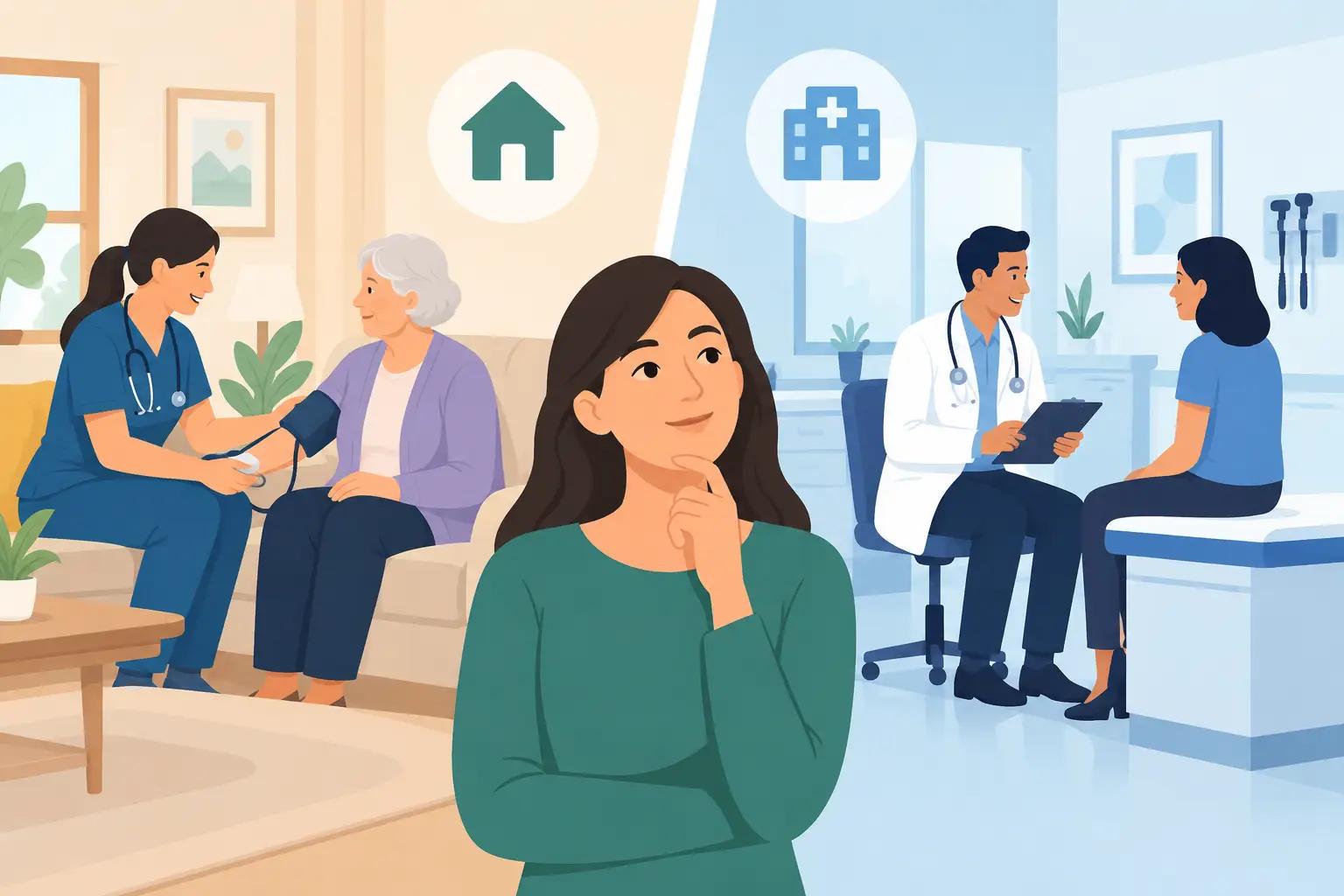
A sick parent who cannot manage the stairs, a child vomiting through the night, or a working adult too unwell to sit in a waiting room can turn a simple healthcare decision into a stressful one. When considering home visit versus clinic care, the right choice is not always the closest or fastest-looking option. It depends on the symptoms, the person’s mobility, the level of assessment needed, and whether care can be provided safely at home.
For many households, a doctor house call means medical attention can happen in a familiar setting, with family members present to explain concerns and support the patient. A clinic remains the better setting when diagnostic equipment, urgent imaging, or a higher level of observation is needed. Knowing the difference helps families act promptly without taking unnecessary risks.
Home visit versus clinic care: the practical difference
A home visit brings a clinician to the patient for an assessment, treatment plan, and, where suitable, follow-up care. Depending on the patient’s needs, in-home services may include a medical consultation, medication review, wound care, blood sample collection, IV treatment, nursing procedures, physiotherapy, rehabilitation support, or advice for caregivers.
Clinic care places the patient closer to on-site facilities. A clinic may be more appropriate when a patient needs tests that cannot be arranged at home, such as an X-ray, certain scans, or immediate access to a wider range of equipment. It can also be a sensible choice for people who are mobile, stable, and able to attend without significant discomfort or delay.
The main advantage of home-based care is not simply convenience. It is the ability to assess health in context. A clinician can see whether a patient is drinking enough, how they move around the home, what medicines are actually being taken, and whether there are practical risks such as falls, poor wound-care routines, or caregiver strain. These details can be especially useful for older adults and people recovering after hospitalization.
When a home visit may be suitable
Home medical care can be a practical option for common acute illnesses when the patient is stable but needs timely assessment. Examples may include fever, flu-like symptoms, food poisoning, mild dehydration, urinary symptoms, a persistent cough, skin concerns, or medication side effects. The clinician still needs to assess suitability before confirming a visit and treatment plan.
For a younger, otherwise healthy adult with a minor illness, the value may be avoiding travel while unwell and receiving clear advice on medication, hydration, warning signs, and follow-up. For an older person, the value can be greater. Transporting someone with weakness, arthritis, dementia, or limited mobility may require considerable coordination and can worsen fatigue or confusion.
Home visits are also well suited to care that benefits from repeat observation. A healing wound, for example, may need dressing changes, infection monitoring, and guidance for the family member helping between visits. A medication review may reveal duplicate prescriptions, missed doses, or medicines stored in several rooms. These are problems that can be harder to identify during a brief appointment away from home.
Recovery and chronic-condition support
The decision becomes less about one appointment and more about continuity when someone is returning home after a hospital stay. Patients may need assistance with wound management, mobility, nutrition, medication schedules, equipment arrangements, or rehabilitation goals. Coordinated home care can bring these needs together so that the family is not left to organize each task separately.
For chronic conditions, a home visit can support routine reviews when clinic attendance is difficult. This may include monitoring symptoms, reviewing treatment adherence, discussing changes in appetite or mobility, and helping caregivers understand what to watch for. It does not replace specialist or hospital care when those services are required. Instead, it can help connect day-to-day care with the patient’s wider medical plan.
Palliative support is another situation where the setting matters deeply. Care at home may help a person remain comfortable in familiar surroundings while family members receive practical instruction and professional guidance. The care plan should be individualized, with clear discussion of symptoms, available services, after-hours concerns, and when escalation is necessary.
When clinic or hospital care is the safer choice
Home care has limits, and responsible care means recognizing them early. A doctor can assess many conditions at home, but no home visit should delay emergency treatment. Call emergency services or go to an emergency department immediately for symptoms such as:
- chest pain, severe breathing difficulty, or blue lips
- signs of stroke, including facial drooping, arm weakness, or sudden speech difficulty
- loss of consciousness, a seizure, severe confusion, or sudden extreme weakness
- uncontrolled bleeding, a major injury, or severe allergic reaction
Hospital assessment may also be needed for severe dehydration, persistent vomiting with inability to keep fluids down, a high-risk infection, rapidly worsening symptoms, or any condition requiring urgent imaging, surgery, specialist intervention, or continuous monitoring.
A clinic may be the better middle ground when the person is stable but needs tests or equipment that are readily available there. The key question is not whether home is more comfortable. It is whether home is clinically suitable for what is happening now.
What families should consider before deciding
Start with the patient’s symptoms and how quickly they are changing. A stable problem that has developed gradually may allow time to arrange a home assessment. New or rapidly worsening symptoms need a more cautious approach. If you are unsure, describe the symptoms clearly when you inquire so the care team can advise on the appropriate next step.
Next, consider mobility and the burden of travel. Can the patient get safely into a vehicle? Will waiting in a clinic cause pain, fatigue, distress, or exposure to other illnesses? For someone who is frail or recently discharged, a clinic trip may take hours and require more energy than the appointment itself.
It is also helpful to think about the purpose of the appointment. A straightforward examination and treatment discussion may be manageable at home. A problem that likely needs a scan, a procedure, or multiple same-day tests may be better handled at a clinic or hospital. If a patient needs both a medical assessment and ongoing support afterward, home-based services can offer a more coordinated path.
Cost and availability deserve a direct conversation as well. Ask what the visit includes, whether nursing procedures or medications carry separate charges, what time window is available, and how follow-up will be handled. Clear pricing and confirmation before treatment help families plan without surprises.
Making a home visit work well
A little preparation helps the visit focus on the patient rather than paperwork. Have the patient’s identification, medication list, allergy information, recent discharge notes, and relevant test results ready. If possible, write down when symptoms started, what has changed, and any temperatures, blood pressure readings, or glucose readings taken at home.
A family member or caregiver should be present when practical, especially for an older adult or anyone with memory difficulties. They can share observations that the patient may not remember, learn how to support the treatment plan, and understand which symptoms should prompt a call for further advice.
Dr Care At Home coordinates doctor house calls and related in-home services across Kuala Lumpur and Selangor after discussing the patient’s needs, availability, suitability, and fees. That upfront conversation is part of safe care, not a barrier to it. It helps match the household with the right level of support.
The best choice is the one that gives the patient appropriate care without avoidable strain or delay. If travel is difficult but symptoms are stable, a home assessment may provide calm, practical support where it is needed most. If symptoms suggest an emergency or a need for hospital-level testing, choosing faster escalation is an equally important act of care.