
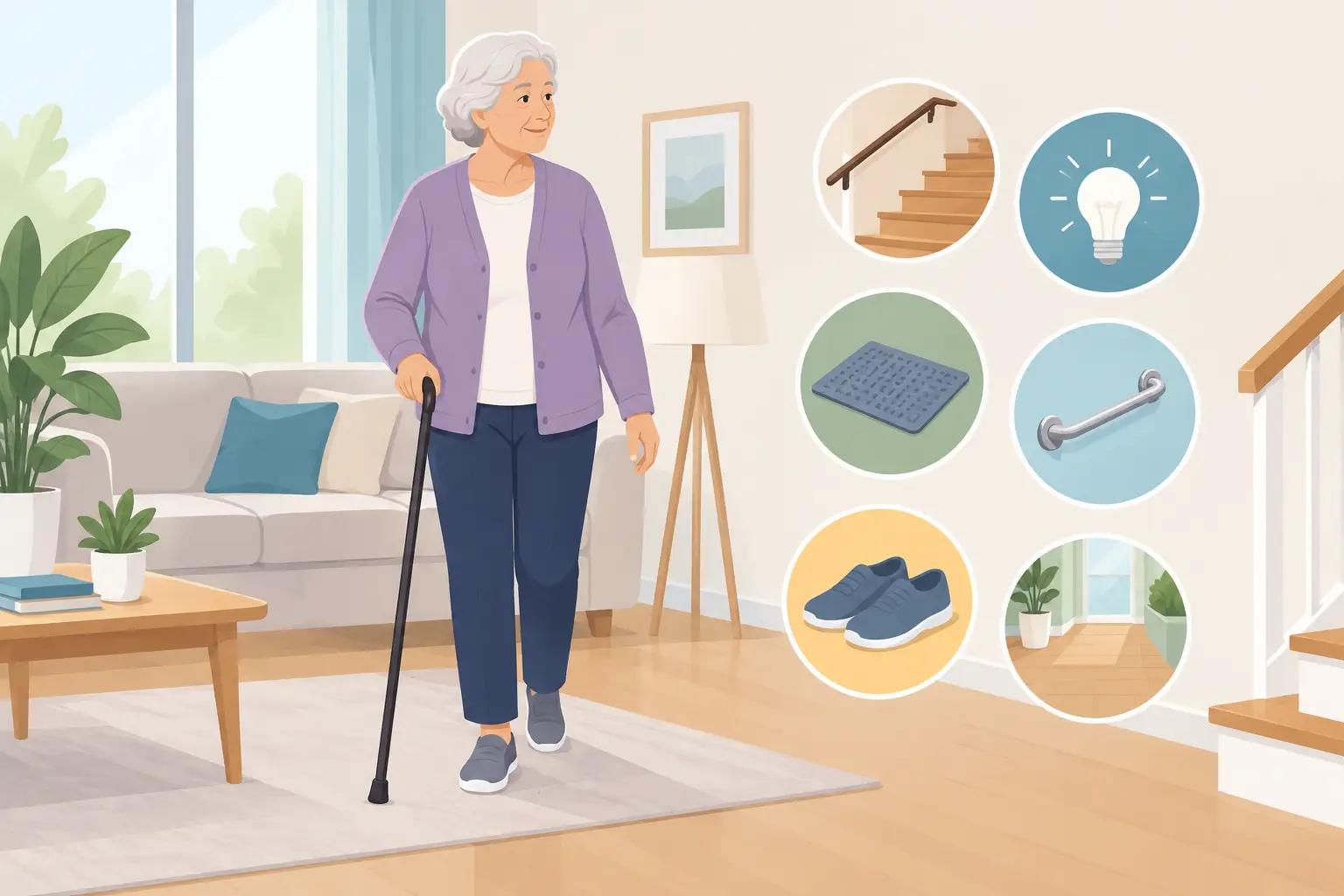
A fall can change a family's routine in a single afternoon. A parent who was managing independently may suddenly fear walking to the bathroom, need help getting out of bed, or face a long recovery after a fracture. Thoughtful fall prevention for elderly at home is not about making the house feel clinical. It is about removing avoidable risks while protecting confidence, comfort, and independence.
Falls rarely have one cause. A loose rug may be the immediate trigger, but poor balance, dizziness, vision changes, weak leg muscles, dehydration, or a medication side effect may have made the fall more likely. The most useful approach looks at the person, their daily routine, and each part of the home together.
1. Start with the routes used every day
Walk through the home at the same times your parent usually moves around: when they first get up, before bed, and during nighttime bathroom trips. Look at the route from bed to bathroom, bedroom to kitchen, and front door to car. These are where rushed movement, low light, and clutter often meet.
Keep pathways wide and clear. Move low stools, electrical cords, baskets, and decorative items away from walking areas. Secure loose carpets with non-slip backing, or remove them if they curl at the edges. A polished floor can also become hazardous when wet, so spills should be dried promptly.
Do not assume a walking aid alone makes a route safe. A walker needs enough room to turn without catching on furniture. A cane should be within reach before the person stands up, not parked across the room.
2. Make lighting part of the safety plan
Dim lighting makes changes in floor level, door thresholds, and obstacles harder to see. Add bright, even lighting in hallways, stairways, bathrooms, and entrances. Light switches should be easy to reach from the bed and at both ends of a staircase.
Night lights can be particularly helpful, but placement matters. Use them to light the entire path to the bathroom rather than creating a bright spot followed by a dark stretch. Motion-sensor lights may suit a person who gets up frequently at night, although they should be tested to ensure they turn on quickly enough.
Encourage regular eye checks. New glasses, cataracts, glaucoma, or reduced contrast sensitivity can affect depth perception even when someone says their vision is “good enough.”
3. Treat the bathroom as a high-risk area
Bathrooms combine hard surfaces, water, tight turns, and the need to move quickly. A non-slip mat inside and outside the shower is a simple start, but it may not be enough for someone with poor balance or leg weakness.
Grab bars should be professionally secured near the toilet and in the shower or bathing area. Towel rails are not designed to support body weight. A shower chair and hand-held shower head may reduce the need to stand for long periods. A raised toilet seat can also make standing easier for someone with painful knees, hip weakness, or recent surgery.
If the bathroom is far from the bedroom and nighttime urgency is a concern, discuss practical alternatives with a clinician. For some people, adjusting fluid timing, reviewing bladder symptoms, or using suitable bedside equipment may be safer than repeatedly rushing through a dark hallway.
4. Check footwear, clothing, and everyday habits
The safest home setup can still be undermined by slippery slippers or poorly fitting shoes. Choose footwear with non-slip soles, a secure heel, and enough room for swelling or foot deformities. Walking in socks on tiled or wooden floors is a common and preventable risk.
Clothing should not drag on the floor or catch under a shoe. If a parent feels unsteady after standing, encourage them to pause at the edge of the bed or chair before walking. This small habit gives the body time to adjust and can reduce falls related to a sudden drop in blood pressure.
Adequate fluids and regular meals also matter. Dehydration, low blood sugar, and weakness during an illness can cause lightheadedness. Older adults who limit drinks because of frequent urination may unintentionally increase their risk.
5. Arrange a medication review
Some medicines can cause drowsiness, blurred vision, low blood pressure, or dizziness, especially when several prescriptions and supplements are taken together. Sleep medicines, pain medicines, blood pressure medicines, diabetes treatments, and some anxiety medicines may require particular attention, but no medication should be stopped without medical advice.
A medication review is especially worthwhile after a new prescription, a recent hospital discharge, repeated near-falls, or a change in alertness. Bring all prescription medicines, over-the-counter products, vitamins, and herbal remedies into the discussion. The goal is not simply to reduce medicines. It is to make sure every treatment remains appropriate, correctly timed, and understood.
6. Build strength and balance safely
Leg strength, balance, and confidence can decline quickly after illness, hospitalization, or a period of reduced activity. Sitting more often may feel safer in the short term, but inactivity can make standing and walking harder over time.
The right exercise plan depends on the person's health, pain level, and mobility. Some people benefit from guided chair exercises and short walks; others need physiotherapy after a stroke, fracture, joint replacement, or prolonged bed rest. Exercises should be realistic and supervised when there is a high risk of falling. A program that is too difficult can be as unhelpful as doing nothing.
A physiotherapist can assess gait, transfers, stairs, and the correct height and use of a cane or walker. This is useful when a mobility aid is new, borrowed, or no longer fitting the person's needs.
7. Look for changes that need medical assessment
A fall is not always caused by the floor. Sudden dizziness, fainting, new weakness, confusion, chest discomfort, palpitations, fever, or a marked change in walking may point to an underlying medical problem. Recurrent falls or near-falls deserve assessment even if no injury occurred.
Seek urgent medical help after a fall if there is loss of consciousness, severe headache, chest pain, trouble breathing, new confusion, inability to bear weight, severe pain, or suspected head, neck, hip, or spinal injury. Extra caution is needed if the person takes blood thinners. Do not rush them up from the floor if an injury is possible.
For less urgent concerns, a doctor can review chronic conditions, blood pressure, hydration, nutrition, medication effects, and symptoms such as numbness or dizziness. Home-based medical assessment may be appropriate for older adults who struggle to travel, particularly after a recent fall or hospital stay.
Fall prevention for elderly at home after a recent fall
After a fall, families often focus on preventing the same incident from happening again. That is sensible, but a wider review is usually more effective. Ask what was happening before the fall: Was your parent hurrying to the toilet? Had they just started a medicine? Were they recovering from infection, eating poorly, or feeling unusually tired?
It can help to keep a brief record of near-falls, dizziness, and the time of day symptoms occur. This gives the healthcare team clearer information than a general statement that someone has been “a bit unsteady.” It may also reveal patterns, such as symptoms after breakfast, on standing, or late at night.
Fear after a fall is common and should be taken seriously. Some older adults begin avoiding movement, which can lead to more weakness and isolation. Reassurance works best when paired with practical support: a safer route, the right mobility aid, supervised exercise, and a clear plan for getting help.
Involve the whole household
Fall prevention is easier when everyone in the home understands the plan. Family members should avoid leaving bags or laundry in walkways and return commonly used items to reachable shelves. Caregivers can check that glasses, phones, water, and mobility aids are within easy reach before leaving the room.
It is also worth discussing how the person will call for help. A phone should be carried or kept in a consistent, accessible place. For someone who spends periods alone, a personal alert device or scheduled check-in may provide additional reassurance. The right choice depends on mobility, cognition, home layout, and who is available nearby.
For families in Kuala Lumpur and Selangor, Dr Care At Home can coordinate in-home medical assessment, medication review, nursing support, physiotherapy, and equipment arrangements when these services are clinically suitable. Availability, recommended care, and fees should be discussed before a visit so the family knows what support to expect.
A safer home is built through small, repeated decisions: turning on the light, clearing the route, pausing before standing, and asking for help when balance changes. Those choices can help an older parent keep moving through their own home with greater confidence.