A bedsore can worsen quietly. A red patch on the tailbone, heel, hip, or ankle may look minor in the morning and become an open wound within days if pressure, moisture, poor nutrition, or illness are not addressed. When families search for bed sore wound care home support, they need more than a dressing change. They need a practical plan that protects the wound while addressing what caused it.
Pressure injuries, also called bedsores or pressure ulcers, are common in people who spend long periods in bed or a chair, have limited mobility, or cannot reliably feel pain or discomfort. They require prompt clinical attention, especially when the skin is broken. Home care can be appropriate for many patients, but the treatment should be guided by a qualified clinician who can assess the wound, identify risks, and advise when hospital-based care is safer.
Start with a proper wound assessment
Do not judge a bedsore by size alone. A small wound may extend deeper under the skin, while dark or discolored skin can make early pressure damage harder to see. A clinician should assess the location, depth, drainage, surrounding skin, odor, pain, circulation, medical conditions, mobility, medications, and nutrition.
This assessment helps determine whether the wound can be managed at home and which dressing is suitable. The wrong dressing can leave a wound too wet, too dry, or exposed to further friction. Some wounds need simple protection and pressure relief. Others may need regular professional cleaning, removal of nonviable tissue, treatment for infection, or a review by a wound specialist.
If your family member has diabetes, poor circulation, kidney disease, cancer, severe frailty, or a weakened immune system, seek advice early. These conditions can slow healing and raise the risk of serious infection.
Reduce pressure before focusing on dressings
A wound will struggle to heal if the same area remains under pressure for hours. Repositioning is often the most effective part of bed sore wound care at home, yet it can be difficult when a person is weak, in pain, or dependent on others for transfers.
For someone in bed, a caregiver may need to help them change position on a regular schedule recommended by the care team. The schedule depends on the person's skin condition, mattress, ability to move, comfort, and overall health. Avoid dragging the person across sheets, as this creates friction and shearing that can damage fragile skin. Use appropriate transfer aids and ask a nurse or physiotherapist to demonstrate safer techniques if needed.
For someone who sits for much of the day, time in a chair may need to be limited or broken up with position changes. A pressure-relieving cushion can help, but it does not replace repositioning. Avoid ring-shaped or donut cushions unless a clinician specifically recommends one, as they can concentrate pressure around the affected area.
A pressure-relieving mattress may be suitable for patients with existing pressure injuries or a high risk of developing them. The best option depends on the person's weight, movement, care setting, and wound severity. Equipment should be chosen as part of a care plan, not simply ordered based on a product description.
Keep the wound clean and protected
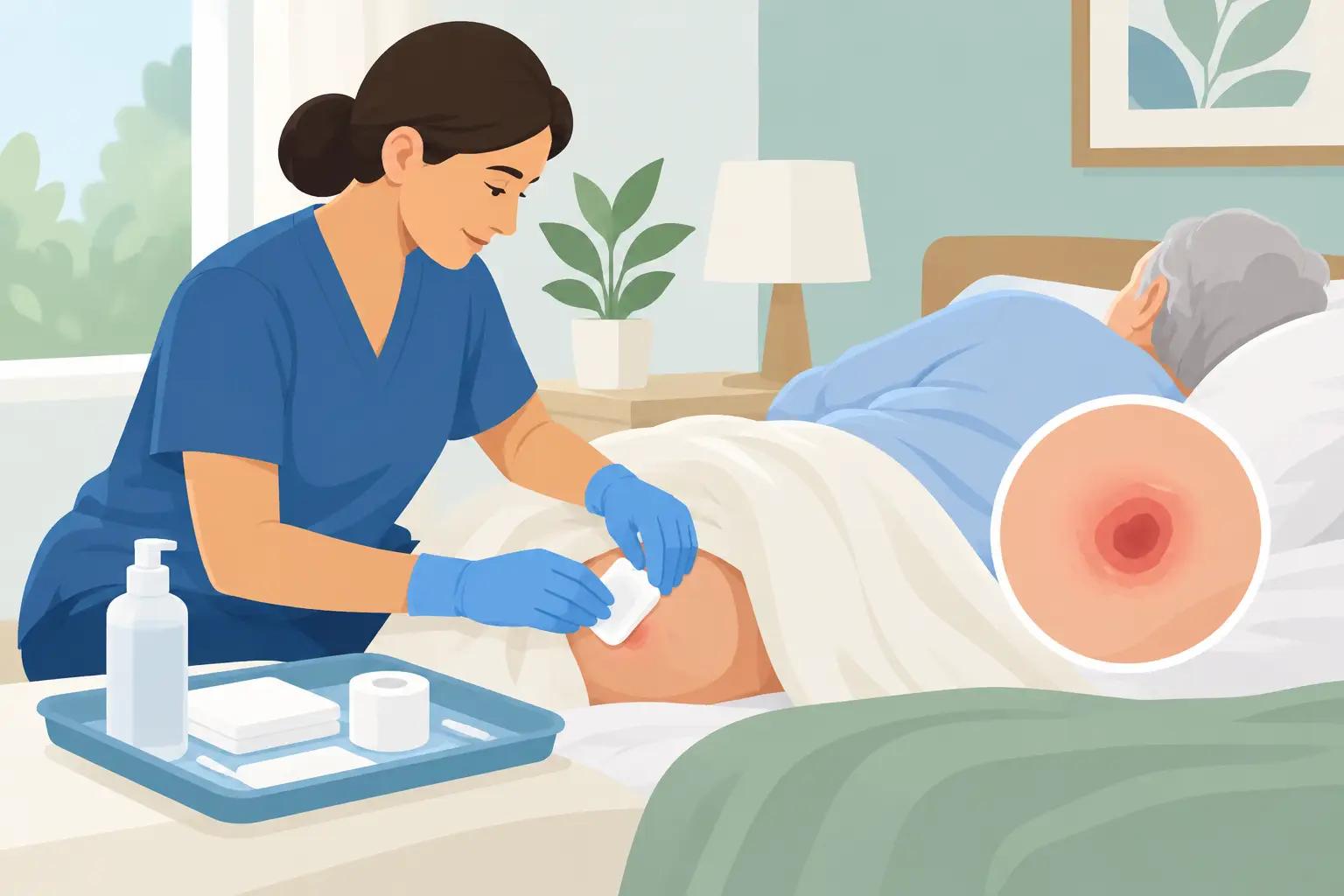
Caregivers should follow the wound-care instructions provided for that individual wound. In general, wash hands before and after care, prepare a clean workspace, and use the supplies recommended by the clinician. Dressings should be changed at the advised interval or sooner if they become loose, wet, heavily soiled, or saturated with drainage.
Do not use hydrogen peroxide, alcohol, harsh antiseptics, herbal products, or leftover antibiotic creams unless a clinician has specifically advised them. These products can irritate healthy tissue and delay healing. Similarly, do not attempt to cut away black, yellow, or dead-looking tissue at home. Debridement is sometimes necessary, but the method and timing must be decided by a trained professional.
Protect the surrounding skin as carefully as the open wound. Sweat, urine, stool, wound drainage, and frequent washing can all break down skin. Gentle cleansing after incontinence, prompt changes of wet clothing or bedding, and a clinician-recommended barrier product can reduce moisture damage. Keep linens smooth and dry, and remove crumbs, tubing, or objects that may press into the skin.
Watch for infection and urgent warning signs
Some drainage and discomfort can occur during healing, but a bedsore should not be managed by guesswork if it changes. Contact a clinician promptly for increasing redness or warmth around the wound, swelling, worsening pain, more drainage, pus, a foul odor, or skin that turns dark, purple, or black.
Seek urgent medical assessment if the person develops fever, chills, confusion, unusual sleepiness, rapid breathing, a fast heartbeat, or a sudden decline in appetite or function. These can be signs that an infection is affecting the whole body. A wound that exposes muscle, tendon, or bone, or one with spreading redness, also needs urgent evaluation.
For a person with diabetes or known circulation problems, a new foot or heel wound should be assessed without delay. Reduced blood flow can limit healing even when the wound appears small.
Support healing with food, fluids, and comfort
Skin repair requires energy, protein, fluids, vitamins, and minerals. Many older adults eat less after illness, during recovery, or when pain and fatigue make meals difficult. A doctor or dietitian can review appetite, weight loss, swallowing problems, diabetes management, and whether nutritional supplements are appropriate.
Offer regular meals with protein sources that fit the person's dietary needs, such as eggs, fish, poultry, dairy, beans, tofu, or other clinician-approved options. Hydration also matters, although fluid intake may need limits for people with heart failure or kidney disease. Personalized advice is safer than pushing fluids or supplements without considering the person's conditions and medications.
Pain control deserves attention too. If repositioning or dressing changes are painful, tell the care team. Better pain management can make it easier for the person to move, sleep, eat, and participate in rehabilitation.
Create a care routine the household can maintain
Consistent care is more effective than an ambitious plan that no one can realistically follow. Keep a simple record of position changes, dressing changes, drainage, pain, meals, fluid intake, and bowel or bladder issues. If advised, take wound photographs at regular intervals using the same lighting and distance, while protecting the patient's privacy. This can help clinicians monitor whether the wound is improving.
It also helps to assign clear responsibilities. One family member may coordinate appointments and supplies, while another assists with meals or repositioning. If caregivers are exhausted or the patient needs frequent clinical procedures, arranging professional nursing support may protect both the patient and the household.
A coordinated home-care plan can include medical review, nursing wound care, medication checks, equipment arrangements, dietitian input, and rehabilitation support. Dr Care At Home can discuss whether home-based assessment and follow-up are suitable, along with availability, treatment needs, and fees before a visit is arranged.
Know what healing should look like
Healing is rarely perfectly linear. A wound may produce some drainage, look different as tissue changes, or require adjustments to the dressing plan. Still, over time, a well-managed wound should show signs of progress: less pressure damage around the site, healthier tissue, reduced drainage or odor, less pain, and gradual reduction in size or depth.
If the wound is not improving, do not assume patience is the only answer. The care plan may need to change because of ongoing pressure, infection, poor circulation, inadequate nutrition, uncontrolled blood sugar, medication effects, or an incorrect diagnosis. Early reassessment can prevent a manageable wound from becoming a medical emergency.
The most helpful next step is often simple: protect the area from further pressure today, document what you see, and arrange a professional assessment before the wound has a chance to deepen.