
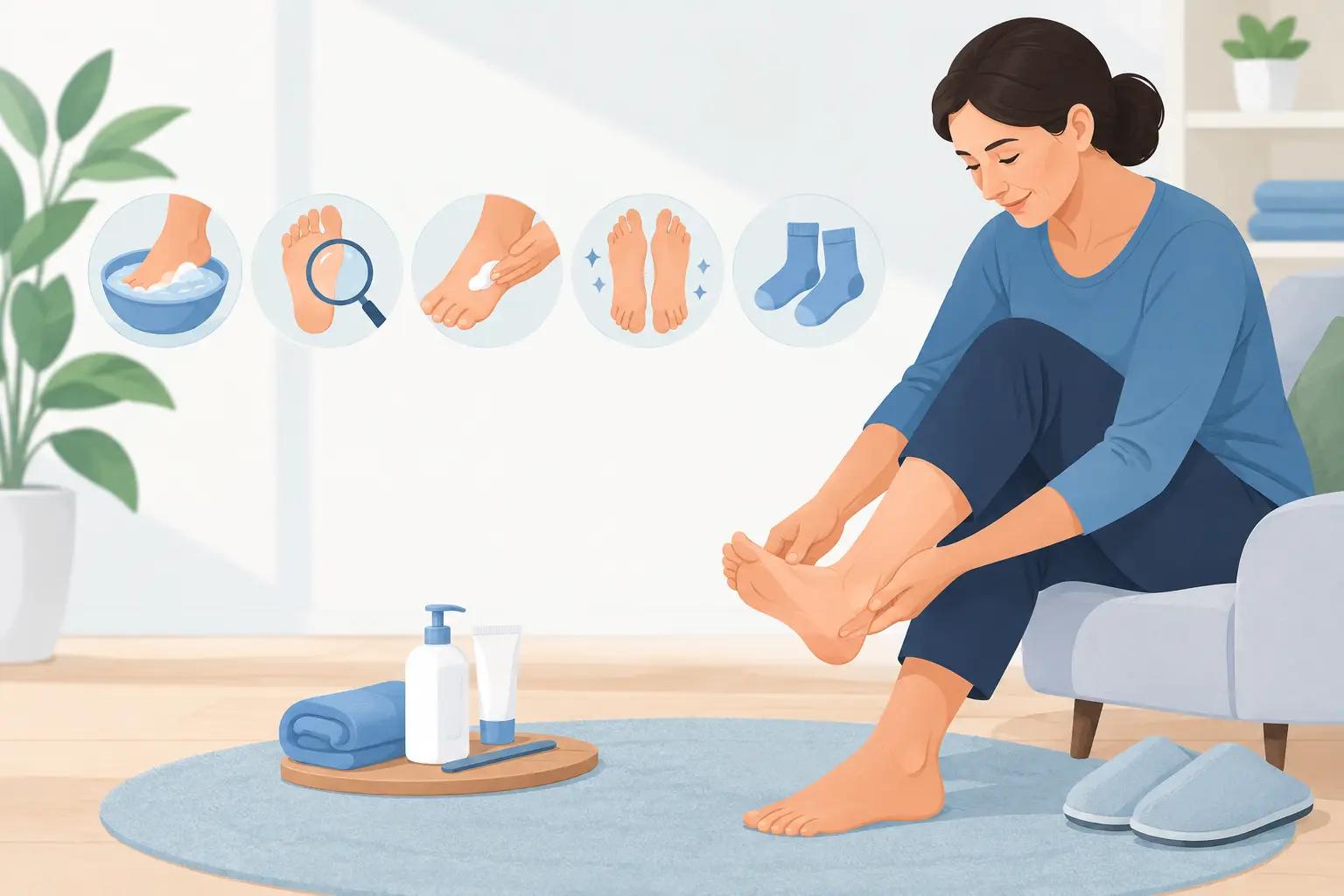
A small blister can become a serious problem faster than many people expect when diabetes affects circulation or feeling in the feet. Diabetic foot care at home is not about being overly cautious. It is a practical daily routine that helps you notice changes early, protect fragile skin, and know when home care is no longer enough.
For older adults, people with limited mobility, and family caregivers, this routine also creates a clear way to share useful information with a doctor or nurse. A photo, a timeline of symptoms, and a list of current medications can help a clinician make safer decisions when a foot concern needs assessment.
Why daily foot checks matter with diabetes
High blood sugar over time can damage nerves and blood vessels. Nerve damage may reduce the ability to feel pain, heat, pressure, or a cut. Reduced blood flow can make it harder for skin to heal and for the body to fight infection. This means a person may not realize that a shoe is rubbing, a nail has injured nearby skin, or a small crack has opened on the heel.
Not everyone with diabetes has the same level of risk. Someone with healthy sensation, strong circulation, and no history of foot ulcers may need a straightforward prevention routine. A person with numbness, foot deformity, kidney disease, poor circulation, previous ulcers, or an amputation needs closer follow-up and more cautious decisions about nail, skin, and wound care.
A daily check takes only a few minutes, but it should be thorough. Look at the tops, sides, soles, heels, and spaces between the toes. If bending is difficult, use a hand mirror, ask a family member to help, or arrange regular professional support.
A simple diabetic foot care at home routine
Choose a consistent time each day, such as after bathing or before putting on socks. Good lighting matters because early skin changes can be subtle.
Inspect before you wash
Check for cuts, cracks, blisters, scratches, calluses, corns, ingrown nails, peeling skin, or drainage. Also look for redness, swelling, bruising, shiny skin, color changes, or areas that seem warmer or cooler than the surrounding skin. Notice any new odor from the foot or shoe.
Do not rely on pain as the warning sign. Numbness, tingling, burning, or an unusual feeling of pressure can be just as relevant. If one foot looks different from the other, write down what you see and when it began.
Wash gently and dry completely
Wash feet in lukewarm water with mild soap. Test the water with your hand, elbow, or a thermometer first if sensation in the feet is reduced. Avoid hot water, heating pads, hot water bottles, and soaking feet for long periods. These can cause burns or soften the skin enough to increase the risk of breakdown.
Pat feet dry rather than rubbing them vigorously. Take particular care between the toes, where trapped moisture can encourage fungal infection and skin damage. If the skin is dry, apply a thin layer of moisturizer to the tops and soles of the feet. Keep lotion out of the spaces between the toes.
Protect feet with socks and properly fitting shoes
Wear clean, dry socks every day. Choose socks without tight elastic bands or thick seams that could create pressure points. Shoes should have a roomy toe box, supportive sole, and enough depth to avoid rubbing the toes or top of the foot.
Before putting shoes on, feel inside for stones, torn lining, loose inserts, or other objects. Even a small pebble can cause injury if sensation is reduced. Avoid walking barefoot, including indoors, on hot pavement, at the beach, or in communal changing areas. Slippers may feel comfortable but are not always protective enough if they are loose, worn down, or open at the toes.
New shoes should be introduced gradually. Wear them for a short period at first, then inspect the feet for red marks or rubbing. A shoe that causes repeated redness is not a good fit, even if it does not hurt.
Nail, callus, and skin care: know the limits of home treatment
Trim toenails straight across when they are soft after washing, then gently smooth sharp edges with a nail file. Do not cut deeply into the corners or dig out an ingrown nail. If vision is poor, hands are unsteady, nails are thickened, or the person cannot safely reach their feet, it is better to arrange professional foot or nail care.
Do not use corn removers, medicated acid pads, sharp blades, or scraping tools on corns and calluses. These products and methods can injure healthy skin and create an open wound. Do not attempt to pop a blister or cut away dead skin.
Athlete's foot, thick yellow nails, and persistent dry or cracked skin may need treatment, but the right approach depends on the cause and the condition of the skin. Ask a clinician or pharmacist before applying over-the-counter products, especially if there is any break in the skin.
What to do if you find a cut or sore
A minor cut should be cleaned gently with clean running water, patted dry, and covered with a clean, non-stick dressing. Keep pressure off the area as much as possible. Avoid using hydrogen peroxide, iodine, or harsh antiseptics repeatedly unless a clinician has specifically advised them, as they may irritate healing tissue.
Then contact a healthcare professional promptly for guidance. With diabetes, waiting several days to see whether a wound improves can be risky, particularly when there is numbness or poor circulation. A clinician may need to assess the wound depth, signs of infection, blood flow, footwear pressure, blood sugar management, and whether professional dressing changes are needed.
Do not place adhesive tape directly on fragile skin if it can be avoided, and do not use a tight bandage. If a dressing becomes wet, dirty, or soaked with drainage, replace it with a clean one and seek advice.
When to seek urgent medical attention
Some changes should not be managed at home. Seek urgent medical assessment for a foot wound with spreading redness, warmth, swelling, pus, bad odor, fever, chills, or increasing pain. Prompt care is also needed for black, blue, or pale skin; a foot that becomes suddenly cold; a deep cut; a puncture wound; a burn; or any wound that does not begin improving as advised.
A red, hot, swollen foot can sometimes occur even without a noticeable wound or severe pain. This may reflect infection or another serious problem, particularly in a person with neuropathy. Do not continue walking on it while waiting to see if it settles.
Call emergency services for signs of severe illness, confusion, fainting, rapidly spreading infection, or uncontrolled bleeding. If you are unsure how urgent a change is, it is safer to ask for medical advice early.
Make foot care part of the wider diabetes plan
Foot protection works best alongside regular diabetes reviews. Keeping blood sugar, blood pressure, and cholesterol within the targets agreed with a clinician supports long-term nerve and blood vessel health. Smoking cessation, movement that is safe for the feet, balanced nutrition, and medication review may also affect healing and circulation.
At routine appointments, ask for a foot assessment that includes sensation, pulses, skin condition, nail concerns, footwear, and any history of ulcers or infections. Keep a simple record of previous wounds and treatments. For a family caregiver, placing a daily foot check on the same schedule as medication reminders can make it easier to maintain.
If travel, mobility limitations, or recovery after hospitalization makes clinic visits difficult, in-home clinical support may be suitable for assessment, wound care, medication review, and caregiver instruction. The appropriate service depends on the condition, urgency, and what can be safely managed outside a hospital setting.
The goal is not perfection. It is noticing a change early enough to protect the foot, get the right advice, and keep a small concern from becoming a painful interruption to everyday life.